Taking Stock

You may find Archbishop Rowan’s second Presidential Address interesting.  Coming today – immediately after a remarkable address to the Conference from Rabbi Sir Jonathan Sacks – it attempts to set out where we are in the Anglican journey and in the progress of the Conference with  five days to run.

Rabbi Sir Jonathan Sacks produced a truly remarkable address for which he was given a standing ovation.  He made a heartfelt plea to the Conference to stay together.  He set out a visit of Covenant:

‘A covenant of faith …….  is made by a people who share dreams, aspirations, ideals.  They don’t need a common enemy, because they have a common hope.  They come together to create something new.  They are defined not by what happens to them but by what they commit themselves to do.  That is a covenant of faith’

He also produced the telling phrase that a Covenant is predicated on difference.  In short, without saying that he was doing so, he challenged the Anglican Communion to find an expression of Covenant which acknowledges difference and looks to the future.  In the light of that vision, the current proposed version of the Covenant looks both mousey and legalistic.

Archbishop Rowan’s vision is that we should speak:

from the centre. I don’t mean speaking from the middle point between two extremes — that just creates another sort of political alignment. I mean that we should try to speak from the heart of our identity as Anglicans; and ultimately from that deepest centre which is our awareness of living in and as the Body of Christ.’

He went on to give a clear and sympathetic version of the two key positions of groups at this Conference and he appealed to them to give to each other enough to enable us all to move forwards.

On that basis, I couldn’t argue with a word of it.  But, as I listened, it seemed to me that there is more that might be said.

First .. there is another centre in this conference – a significant group which is not identified with either of the main ideological groupings.  One of the objectives must surely be to affirm and strengthen that centre in order to balance the strength of the more extreme groups.  In effect, that centre group is always in danger of being marginalised.

Second.. it is all very well to appeal to people to move towards each other.  But I think you need to set out a sort of roadmap of how that might happen .. words and symbolic actions which might embody the necessary changes.  In Northern Ireland, people used to talk about ‘walking towards each other across the rubble.’

Third .. I constantly hear concern about a tendency to assume a sort of moral equivalence across a range of things which have happened.  A bishop who happens to be in a committed same-sex relationship is elected and consecrated in TEC in accordance with their polity.  To be sure, it raises all sorts of issues about the relationship of TEC with the rest of the Communion.  But I still find it hard to see that as being equivalent to the incursions of other Primates across provincial boundaries.

Great Scottish night out this evening.
What goes around

At breakfast this morning, someone passed me TS Eliot’s response to the report of the Lambeth Conference of 1930. He says, ‘The Report … is rather the exposition of the ways in which the church is moving than an instruction to the faithful on belief and conduct.’ In other words, a staging post rather than an end point.
Readers of this blog will know that I have always believed that people were over-hyping this conference. I have never expected that this might be the point at which the big issues in the Anglican Communion would be finally sorted out. I think that the most we can expect is that some positive movement will emerge – a new dynamic which may help us to deal with our diversity. For myself, I can say that I feel part of the Anglican Communion now in a way which I have never felt before. I have acquired friends all over the Anglican world and they will remain part of my landscape. There is also evident everywhere in this Conference a desire to cohere – people understand that we shall all be diminished if we lose the struggle to remain together.

Our Bible Study Group continues to deal with the difficult issues with courage and grace.
But ..

I don’t think the Indaba process will deliver what we need. We would need to set for hours and hours.  We are giving too little time to it and trying to cover too much ground.

This Conference has been running for nearly two weeks. I simply cannot understand why it will be Thursday before we reach ‘The Bishop and Human Sexuality.’ To rush the big issues at the end of a Conference is never wise. I went today to the hearings of the Windsor Continuation Group. Bishops from all over the world were being allowed three minutes each to speak on very complex issues – yellow card after two minutes and red after three. Differences were being aired with grace and dignity. But it was not a graceful or dignified process.

If there is a channel through which issues like this can be raised with the management of the conference, I have not yet found it.  Maybe there are different cultures at work here as regards expectations of how a conference can evolve as it happens.

Moment in Time

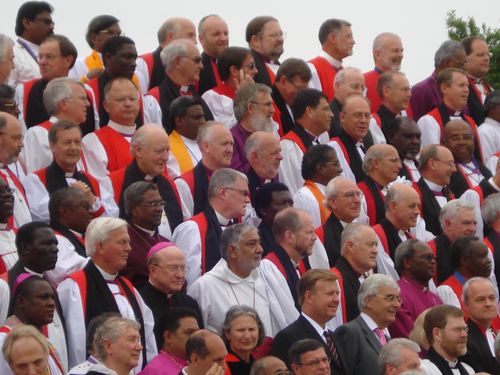
Smallest at the back. It was fiercely hot. The photograph is one of those iconic Lambeth moments – frozen in time for ever on Diocesan Office walls all over the world. But maybe times change. As we stood in tiers where the saints had stood, I pondered the great figures of the past who are remembered in areas of the Blogstead Gardens – Bell, Temple and the others. I doubt if they and their contemporaries would have sung Amazing Grace in 680 part harmony while they waited in searing heat for the photographer to GET ON WITH IT. Which he did.

Meanwhile, we carry on conferencing. Today is a day out. I’ve chosen not to go and preach in a parish in the Canterbury Diocese. Lots of people with much more interesting stories to tell than mine. We’re going to do some family visiting and catch our breath. We start with Eucharist at 7.15 am and it’s been non-stop until I write the blog somewhere before or after midnight. We’ve done ten days of that and there are seven to go. And it’s been hot and humid.

In the last two days, the Indaba Groups have looked at ecumenical matters and the environment. I was slightly startled at how rapidly the group I was in dismissed the entire world of institutional ecumenical engagement. The opening video about the work of the WCC simply generated anger. Irrelevant, unhelpful, out of date, incomprehensible .. were some of the comments. I don’t think I have ever known a more arid time for ecumenical relationship. If this Conference is about the role of the bishop as leader of mission, I think we must pin our hopes on ‘Growing together in mission.. ‘

The environmental discussion was interesting. In my group it became a ‘wake-up’ call from bishops from the Third World to the rest of us. We need to hear it.

We’re still wrestling with the Indaba Group method. We’re going to try some variations on the working method next week. In our Bible Study we’re going to continue to talk about the difficult stuff and bring that to the Indaba Group. Maybe. But elsewhere there are signs of hope – difficult agendas are coming to the surface and being explored patiently.

Anti-climactic

So back to business after the excitements of yesterday.

Our Bible Study Group continues to enthrall.  We talked a bit about why bishops seem to suffer so much.  I suspect that the clergy would find that a strange thing to be talking about.  Like other Indaba Groups, we decided that the time had come to suggest that we needed a new working method.  So we’re now in negotiation with ourselves – more time to deal with things in depth and less of the Youth Conference mentality.

Other things .. we don’t seem to be able to contact each other here.  We have no access to each other’s mobile numbers or e mail addresses.  It’s all very well to say that this is because of Data Protection – a simple consent at registration would have dealt with it.  I spend ages waiting for people to come down to the waterhole at sunset.

I spent a bit of time in the worship this morning pondering the spiritualities of all this.  Archbishop Rowan started us off with a tour de force of retreat addresses.  The message was .. ‘get to know one another and pray together .. that’s the foundation for dealing with what we have to deal with.’  I just wish the prayers in worship could grow a bit – different people and nationalities, some pictures and, above all, some silence.  It looks as if a decision was made to allow provinces in turn to lead the morning eucharist – so we lose the possibility of worship which would have a real sense of integration while still expressing that diversity of input.

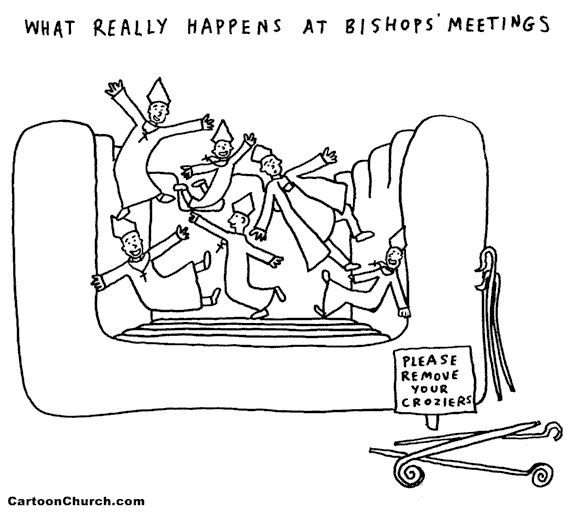
And finally, you might be amused by Dave Walker’s cartoon on the Windsor Report

Extraordinary Day 1

The ‘London Day’ is a traditional part of the Lambeth Conference. Alison really enjoyed it. I pretended to be a bit ‘cool’ about it – but I enjoyed it too. And we all did.

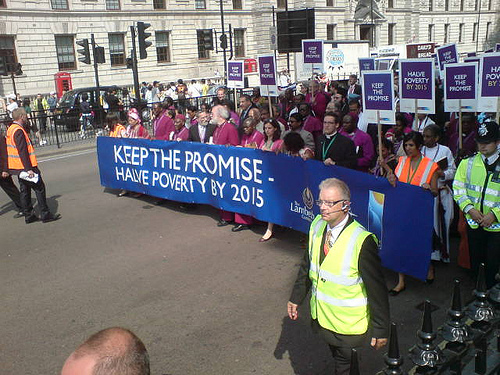
On the buses at 7.15 to have us in London in time for the great demo in support of the Millennium Development Goals.

This is one of the issues which really brings us together. How could one not feel strongly about it when one is walking with so many bishops from the developing world? It was hot and the BBC News helicopter was above us filming the endless bald and grey heads. So we wandered along – 680 of us – in cassocks and pectorals accompanied by female spouses [those of us who are male, that is] dressed in clothes fit for a queen [of England, that is]. The journalists I think were counting us lest the Conference organisers might be faking the numbers. We pretended to ignore the protesters – who are becoming part of our landscape – and who wave their ill-written posters at us. I do not carry my glasses.
At Lambeth Palace, we dutifully filed in through a little gate and into an Alice in Wonderland expanse of nine acres. As one who used to look after two acres of lawn, I can see that Rowan is pretty nifty with the ride-on mower and the strimmer on Saturday afternoons.

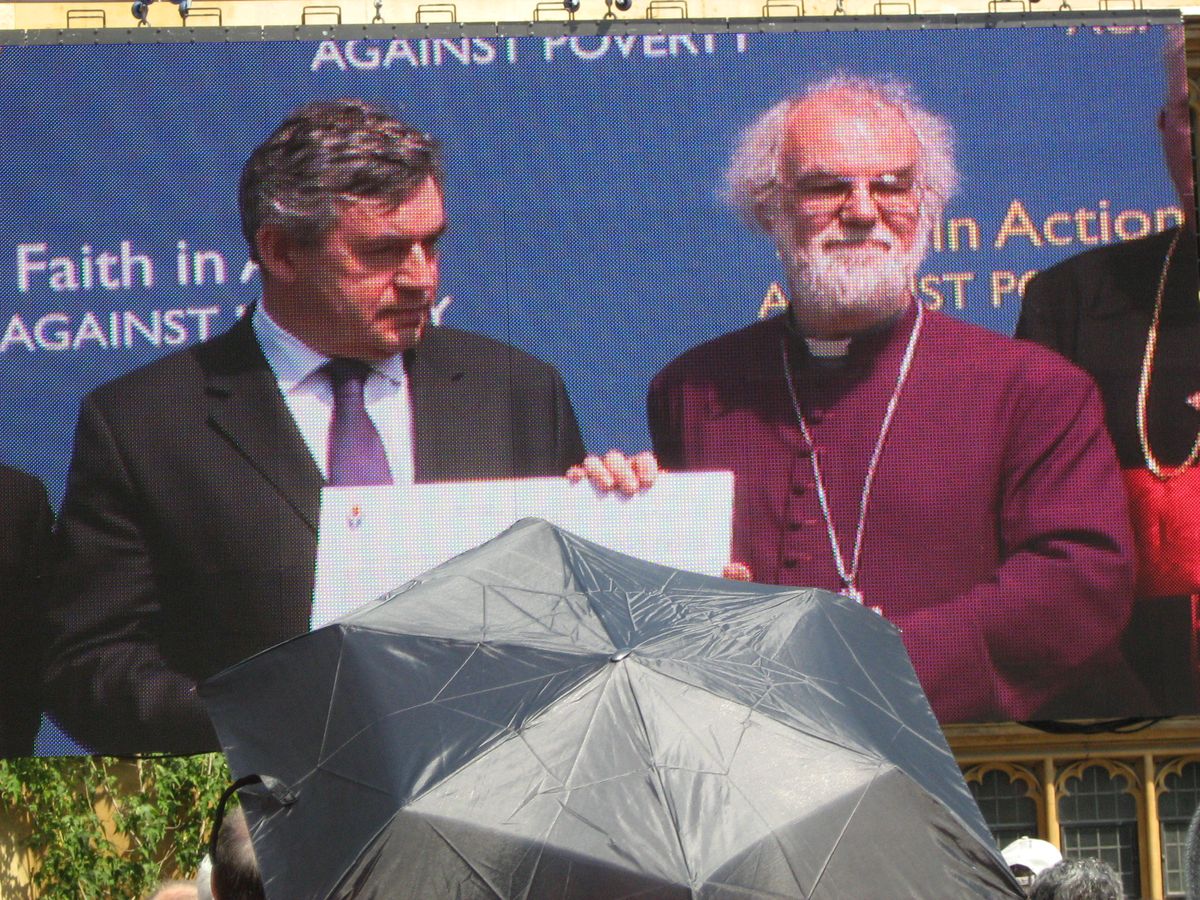
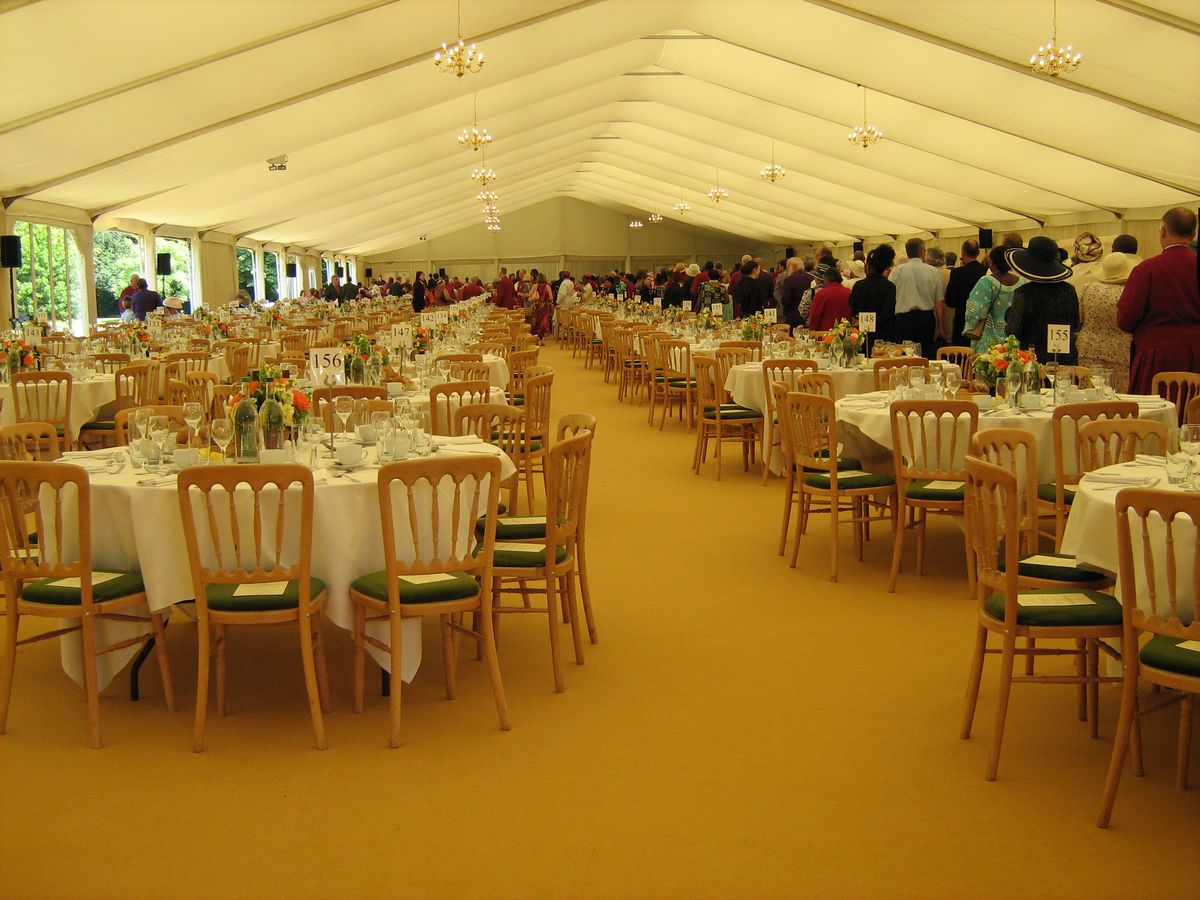
We listened to a barn-storming speech from Gordon Brown, who seems genuinely passionate in his commitment to this cause. Then, having marched for the eradication of poverty and hunger, we sat down to a beautiful lunch.


And we talked and made more contacts, talked and made more contacts – and it was good. We seem very open to one another – uncomplicatedly unreserved in explaining to another bishop who asks why we feel as we do and how the future looks. If that can find its way through the Indaba Groups we may have a future after all.
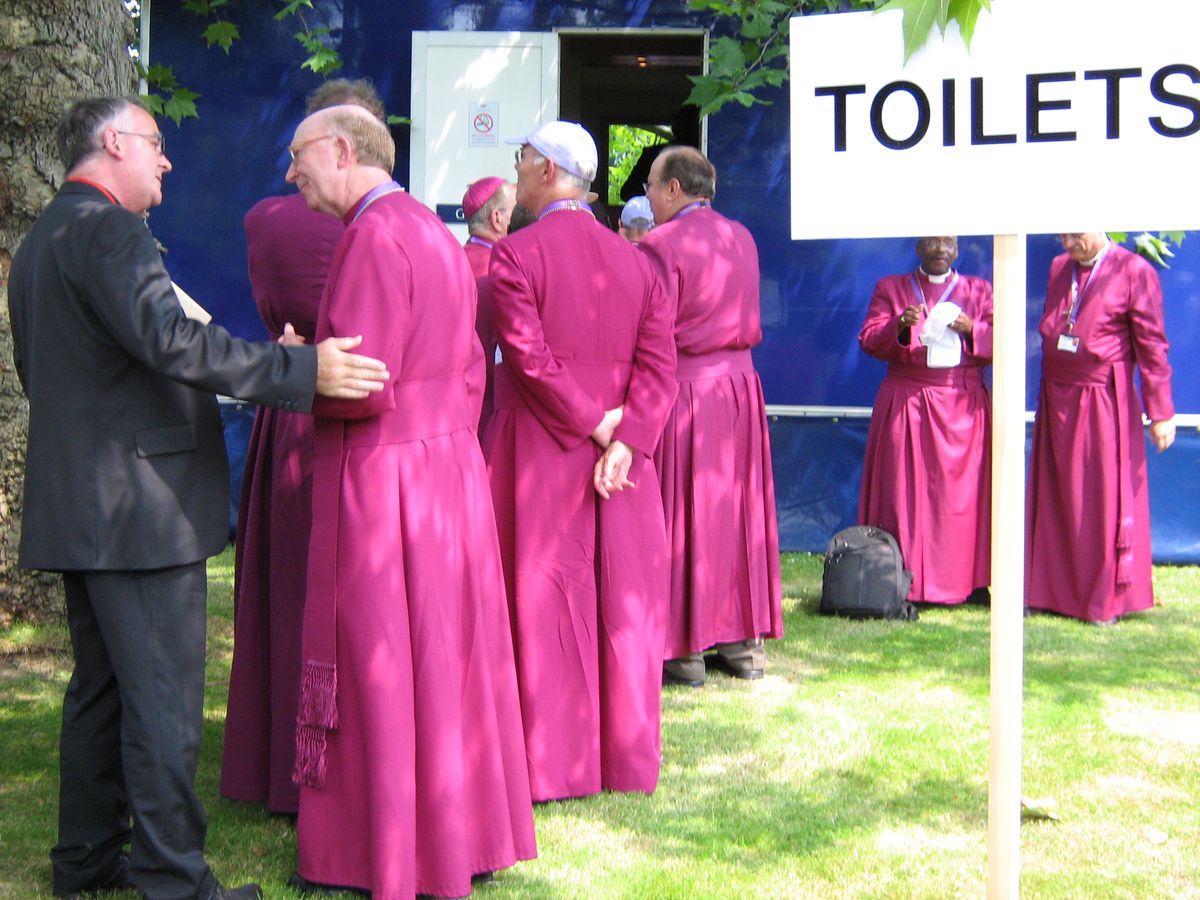
After lunch, having stood in line to use the Igloos, we headed off for our second palace of the day for the Buckingham Palace Garden Party. We took tea and queued up for the rather magnificent loos – and ate ice cream and listened to the bands and queued up for the loos just to see if they were as palatial as they were the first time. I flushed experimentally just to see if they would play ‘Rule Britannia’. The Queen is just amazing – she spent over an hour greeting and talking her way through the crowd before she got her cup of tea. As always I am fascinated by the power of royalty – we press forward to see but aren’t quite sure why. We watch as in a zoo, not quite sure which side of the bars of the cage we are.

And we queued up for the loos again just to be sure we wouldn’t get caught short on the way home. Then as the shadows began to lengthen, we headed back – 38 busloads of snoozing bishops ‘n’ spouses.

Living Sacrifices

After the statement from the Archbishop of Sudan yesterday, things seemed rather more bracing here. So I found myself for the first time in eight days reaching for my Pectoral Cross this morning – the black, Fermanagh bog oak since you ask. Dress expresses mood.

So first I went into our completely remarkable Bible Study Group and suggested that we might take the opportunity which the study of scripture offered us this morning to explore some of the issues raised. Since the study was about the woman taken in adultery and issues of judgement, it seemed completely appropriate. So we did. Bible Study in this company is like Nigel Kennedy playing Bach. It’s all in the spaces.

Then I reflect on the experience of the rest of the day. Alison and I compared notes and found that throughout the day we had been exposed to heroic stories of bishops and their spouses – completely humbling stories of commitment and sacrifice .. stories from spouses of families left behind, of careers sacrificed and of extraordinary labour on behalf of the poor and the voiceless. What is common to many of these stories is how important it is to be members of the Anglican Communion.

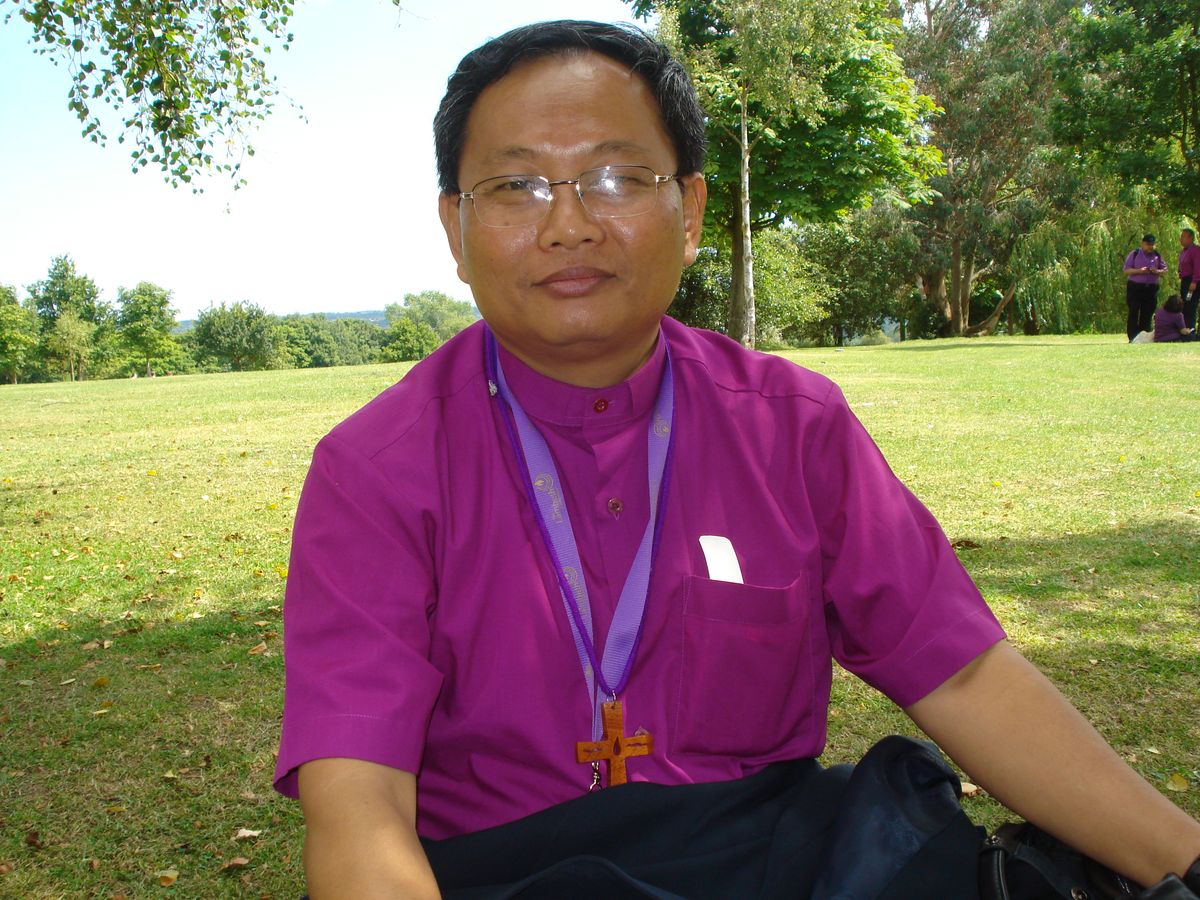
I spent an hour with Archbishop Stephen of Myanmar who has links with our congregation in Kirkcaldy and came and had a meal with us last year. I suspect he shared with me but a fraction of the story of his ministry and his people. I simply give thanks that he is where he is.

We then went down to the Cathedral to meet the young people of our Provincial Youth Network who are taking responsibility for the Labyrinth in the Crypt. They represent faith, commitment and good humour. We shared a meal with them afterwards.

And finally .. We went to the evening visit to the Cathedral. Empty of visitors, long shadows in the Crypt. It reminded me of Susan Howatch’s description of the great Cathedral at Starbridge glowing in the evening light. We ended by standing in a circle by candlelight around the shrine of Beckett high at the east end of the Cathedral. Misty-eyed again, I’m afraid, as I began to link in my mind the martyrdom of Beckett with those extraordinary stories of obedient, resolute and joyful sacrifice which I had been hearing all day.

That is the Anglican Communion – precious beyond imagining.

So tomorrow, like all good pussy cats, we’re off to London to visit the Queen. It’s cassocks only. Apparently the Spanish-speaking bishops are engaged in energetic discussion as to whether this means what it says. I think they should wait for a reading of both temperature and wind strength. Of which more tomorrow.

Good Sermon Vicar!

How many really good sermons have you heard in your life? Not all that many, I suspect. I added one to my list this morning at the Eucharist when James, Bishop of Southern Malawi, preached on the reading from John – Jesus explaining the feeding of the 5000 – a nightmare for preachers. He wove a spell of reflection on people’s appetite for Wonder Bread and their desire for signs – and drew it back to the possibility that we ourselves might be the sign … ‘Kiss this frog and you may find your Prince Charming’

If I can say so without being patronising, I think the revelation of this Conference for me has been the quality of the new generation of leadership emerging in the African Churches. They are sophisticated, clear and powerful – clearly have leadership to offer to the whole Communion.

Which brings me back to the session last night on Models for Evangelism from Brian McLaren – polished communication and thought-provoking too. It seemed to me compelling to suggest that some at least of the success of the church in Africa is to do with the move from pre-modern to modern society. He suggested that people cannot bring their old religion with them – Christianity suits modern society exceptionally well. But it can’t cope so easily with the move from modern to post-modern society.

I’ve also been looking at diocesan links and have signed up for some kind of Communion-wide dating agency. Listening to people describing long term and successful links, it seemed to me that the challenge is to get beyond ecclesiastical tourism. The best have been exploring shared training and evangelism and approach it all in a very strategic and intentional way. I have promised not to come back with a link fixed up – rather to try at best to gather up a number of possibilities which we might subsequently explore. Yes – the bishop-to-bishop chemistry does matter. But these are diocesan links above all.

And finally … still early days for the Indaba Groups. That’s the diffused talking process through which the Conference is trying to get to grips with ‘the issues.’ Yes we have to commit ourselves to this – plenaries simply marginalise the centre ground. But …

But … I think that it is difficult to see the roadmap which will lead us towards a conclusion. I am part of an Indaba Group which contains some of the most respected and skilled thinkers in the whole Anglican Communion. But the process is at best undemanding. It certainly is not drawing out the resources in the group which are there for the benefit of all. I think that, to use the dreadful phrase, we need to be sure by the end of this week that it is ‘fit for purpose’

Ordinary Day 1

We’ve been experiencing what the Lambeth Conference Programme enticingly calls ‘Ordinary Day 1’  This is without prejudice to the fact that we arrived here last Tuesday and will not leave until Sunday week.  Ordinary Day 1 has been long.

For me, even if nothing else happened here, it would be worth it for the Bible Study Group.  As we get to know one another better, we edge closer to the difficult stuff.  Given that we have another two weeks, I look forwardwith anticipation to where we may get to.

The press – not that I have time to read it – seems to have been treating the Conference fairly harshly.  Inside the wire, it remains an extraordinary meeting place of the world church.  And as bishops and their spouses begin to loom up in front of one for the second or third time, the conversations become more substantial.  I made a particular effort today to talk to one or two traditionalist bishops from The Episcopal Church [that means the USA]  We talked about dioceses seeking to move themselves to affiliate to other provinces and the difficulties which this creates.  For them the issue of Gene Robinson is merely symptomatic of a whole range of issues – most of which are about theological formulations.  ‘If people cross theological boundaries, the result is that others will have to cross physical boundaries.’

Themes wrap around one another.  Eucharist this morning was led by the South Koreans – the Gospel about frightened disciples in the boat in the storm seeing Jesus walking on the water.  The Korean Archbishop preached about experiencing fear as ‘the absence of God.’  They invited the Japanese Primate to say prayers of reconciliation.  Our Bible Study pondered the fact that the disciples were in one boat – like the gospel book carried in a boat by the Melanesian Dancers in the Cathedral on Sunday.  They didn’t try to throw each other out ..

Today also saw the start of the Indaba Groups – groups of about 40 in which we shall attempt to deal with ‘the issues’.  Doubters?  Yes – probably most of us on some levels.  But, as Rowan Williams said, the former ways of doing things weren’t notably successful either.

But in the end, the extraordinary thing about this Conference is that – even though 200 bishops have stayed away – it is all here.  Everywhere one goes, the Anglican Communion and its issues are there in microcosm.   I sat in the Cathedral just across from the Presiding Bishop of The Episcopal Church and the Bishop of Pittsburg and tried to wrap my prayers around them.  All over the Cathedral, I am sure the same thing was happening.

Saying of the day?  An American bishop who described the low-church culture of some of the congregations in his diocese as ‘snake-belly low.’

Another Day

I’ve been enjoying Dave Walker’s drawings at Cartoon Church.  You need to laugh here.

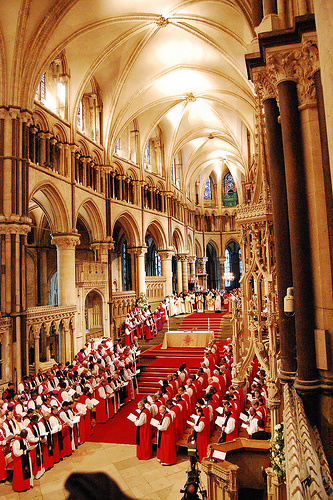
Meanwhile today saw the Opening Service in the Cathedral.  The logistics of moving nearly 700 bishops and their spouses down to the Cathedral are pretty daunting

Here it is.  I’m on the right, by the way.  The Archdeacon of Canterbury, who is a notable Brompton rider, is at the far end on the left.  She did not process with the Brompton.  I thought the Sermon – from the Bishop of Colombo – was excellent.  A classic and very clear statement of Anglicanism.

So there are only fourteen days to go.  And you can feel that we’re already sort of ‘into it’.  I have to say that I’m rather looking forward to  trying to deal with the issues – particularly as they arise in the Bible Study.

Meanwhile, the Management has been silent on the sleeping arrangements.  Maybe they are a Monday to Friday operation.

The Conference wot I am attending

This programme is what some call packly tight.  So I haven’t had more than a moment to find out from the blogs and websites about the Conference which I am supposed to be experiencing.

It seems to me that the atmosphere is warm and friendly.  I can do gregarious when I need to.  But by the end of yesterday, I was contemplating the tee-shirt which said, ‘No more networking today.’   The encounters are fascinating.  The journalists who are looking for stories could stop almost any participant here at random and find that they have an extraordinary story to tell.  I have a feeling that the spouses may well be even more diverse and interesting than the bishops.  After all, they chose a partner but perhaps not this extraordinary way of life.  Yes there clearly is a need to ensure that the Conference addresses difficult issues – but most conferences are a sprint.  This is a marathon.

I look at the bishops – out of their context and, in many cases, casually dressed.  I wonder if I can discern something which this strange breed of people has in common.  They are all hard workers.  Many of them are tired.  They are idealists but they spend a lot of time managing conflicting demands with limited resources.  In many cases, they face extraordinary and dangerous situations.  They can be isolated to the point of lonely.

But they are not the area managers of some global conglomerate coming to Head Office for a pep talk.  They are faith leaders of autonomous churches.  And that is why this Conference is beginning by investing time in the inward spiritual journey and in relationships.  What we need to do demands more than politics and votes.

Two other things ..

The Lord’s Prayer said by each in their own language is unbearably moving.

The bedroom furniture situation continues to be a matter of some interest.  We have now received two billets doux on our pillows from the management.  The beds may have moved but they are unmoved.