A Sermon with Trains for Kinross which has none

I had a pleasant surprise this morning on our visit to St Paul’s, Kinross. There were more children in church than I think I have seen in a month or two. In fact there seemed to be a new congregation comfortably lodged within the old one.

Unusually for me, I went to sleep thinking about Kinross – and woke up thinking about it. So I rewrote the sermon when I got up. I was thinking about vision and narrative – which leads to Dr Beeching and the failure of vision which left Kinross without trains. So when I go to Edinburgh by train – more often I go by bus because it is quicker – it trundles off down the single track to Ladybank.

Here is the Sermon

Telling the Story

We are talking more about ‘the narrative’ these days.  For example, we are preparing to develop a vocational narrative as a way of helping those in training for ministry to have a deep understanding of the church in which they will serve.

And I’ve been doing my bit on this for a while.  Most recently I set out my current version at our Welcome Day for those who are beginning in authorised ministry in our church.  There were 22 of them – and there is real encouragement in connecting with their energy and enthusiasm.

The narrative basically is a version of the story of where we have come from – where we think we are heading for and how we think we are going to get there.  Put God in the narrative and it becomes a faith story.

It’s always been important for me.  When I came to Scotland – eleven years ago now – I spent the first couple of years looking at what I saw in front of me.  I would then say to somebody, ‘This is what I see and this is how I think I understand it.  Is that correct?’  People were never less than patient and helpful.  But of course sometimes what I was asking about was what they took for granted.  So they didn’t quite know how to help me

I’m still doing that and still learning the story of this remarkable church ..


More about Columba #pisky #columbadeclaration #anglican

The Columba Declaration was approved yesterday by the Church of England Synod.   I’ve been doing quite a bit of commenting in the media – and here is a comment which I wrote for our own Inspires:

People expect churches to work together. In the Scottish Episcopal Church, we are keen to work whole-heartedly with the Church of Scotland.  Our histories are intertwined with one another and with the history of Scotland.  Much of that history has been painful and difficult.  So it is important that the new chapters which we write together are positive and creative.

The tasks which we need to address together are very clear to me. We are living through a time of change in Scotland.  Nobody knows where Scotland’s journey will end – but Scotland is on a journey.  Faith communities need to focus on Scotland and the way in which faith is represented and shared in this changing context.  We also need to work together on new understandings of how we can share in local mission across the whole of Scotland.  We need to support one another and work together.  None of us can do this on our own.

I watched the debate in which the Columba Declaration was approved by the Church of England with a sense of unreality. The Scottish Episcopal Church was like a ghost at the party – often referred to and talked about but not present.  Concerns  which have been voiced within the Scottish Episcopal Church about the Columba Declaration focus significantly on the Church of England.  The Church of England and the Scottish Episcopal Church are partner-Provinces in the Anglican Communion.  We are the presence of the Anglican Communion in Scotland and we expect the Church of England to respect that.  The concerns are  that the Columba Declaration places the Church of England in a compromised position in relation to the Scottish Episcopal Church.

The Church of England approved the Columba Declaration. But it was clear that many people in the General Synod were uneasy – aware that something about this is not quite right but not quite sure what.  Ecumenical matters are usually carried through by churches without significant debate.  Yet here 50 people voted against and 49 abstained.

This tells us that we all have work to do. The desire of the two churches to get approval for the Columba Declaration has inhibited their ability to have real dialogue with us about its implications for our future relationships.  Now that it has been approved, the time for that has arrived. We welcome the opportunity for a real dialogue with both partners and pray that out that will come a healing and renewal  both of our relationships and of our shared mission.


On the Mountain Top #pisky

I was in our congregations in St Mary’s, Birnam, and St Columba’s, Stanley today.  It was time to rekindle vision.  And the transfiguration readings were a good opportunity for doing that.

This is what I said

Unfortunately as I listened to the readings a first time … and then a second time … particularly the bit where the disciples who were with Jesus on the mountain top search around for something which they can usefully do, I found my mind drawn back as so often to my favourite bits from Father Ted.  In this case, it was the episode where there is a crisis because Father Dougal is on a milk float which has a bomb on board.  ‘What shall we do?  What shall we do?’ they say.  ‘Let’s say Mass …. ‘

Visiting the Mosque #pisky #visitmymosque


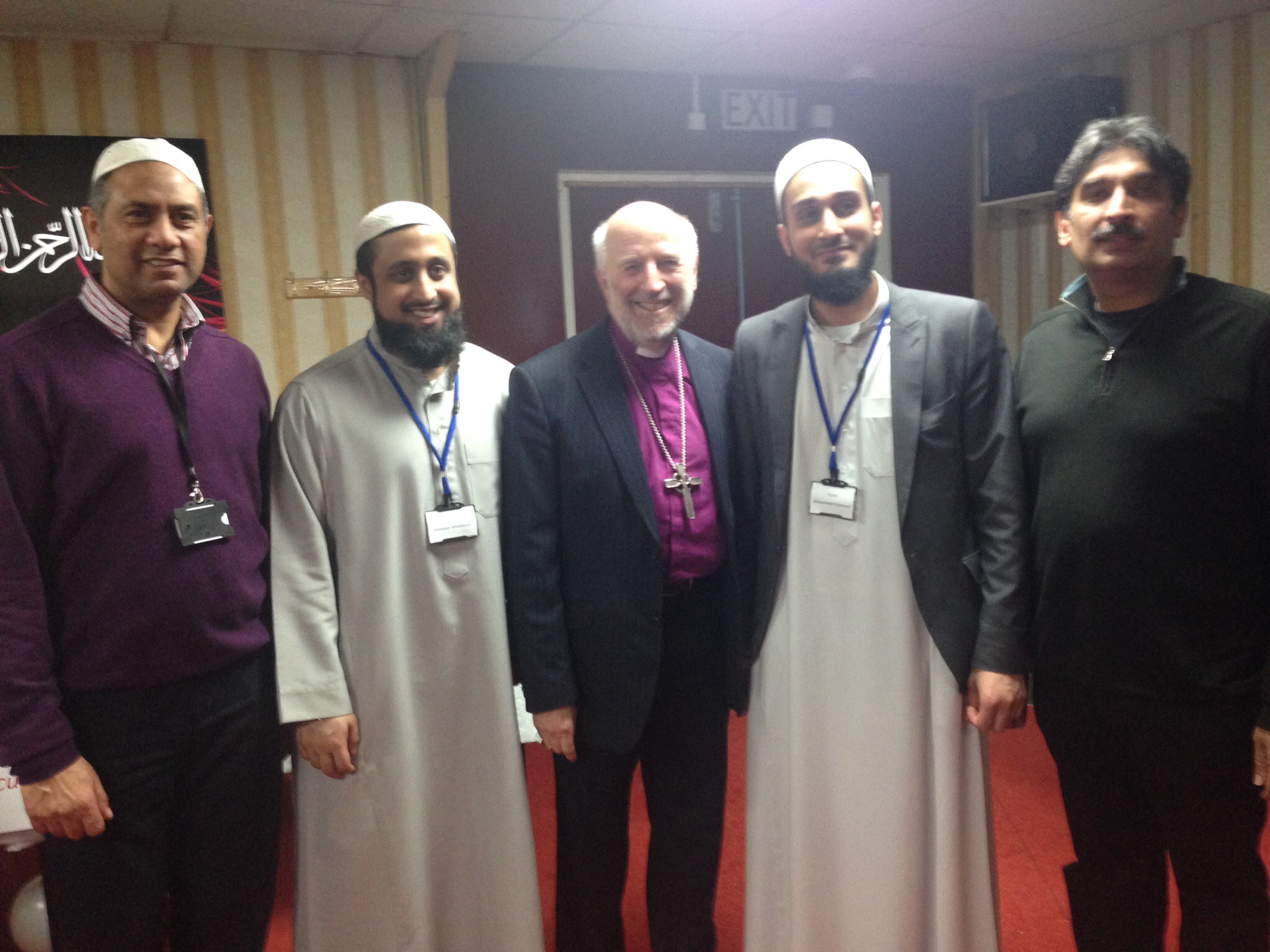
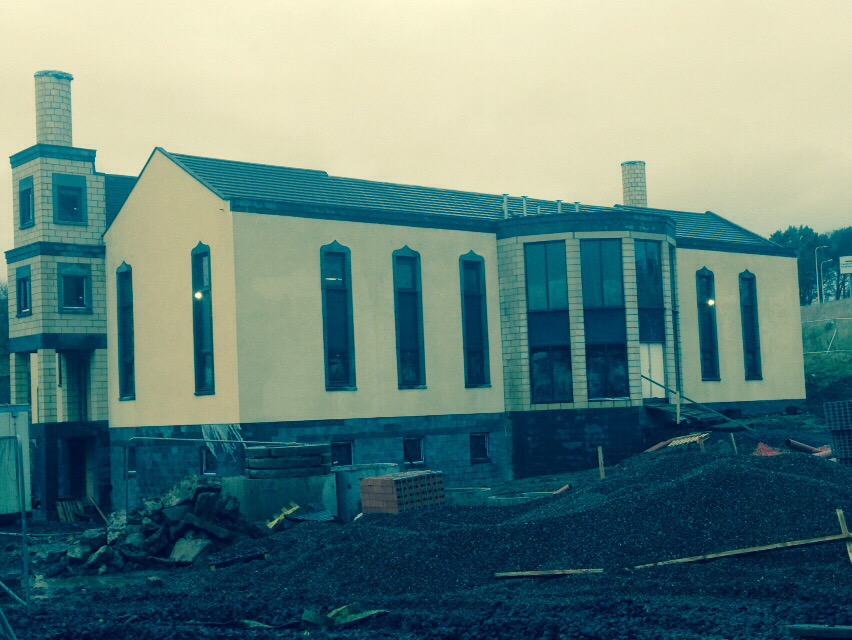
Islamic Centres across Britain have been open to visitors today. So I went this afternoon  to the Central Mosque in Kirkcaldy.  This is the new Mosque which will be finished in a year or two.  For now they meet in much more modest buildings – but the place was full of visitors.  I was there with our Rector at St Peter’s in Kirkaldy, Revd Christine Fraser, and I was glad to find a good representation of her congregation there as well.  These visits are important.  It’s a time for building friendship.  The tragedy of Protestants and Catholics in Northern Ireland was that lack of contact allowed a space to develop – and in that space grew ignorance and then fear.

So here I am with the Chairman of the Mosque and their two youthful and energetic Imans.  They are full of suggestions for contact with the local faith communities – so I’m hopeful!

St Salvator’s in St Andrews

St Salvators


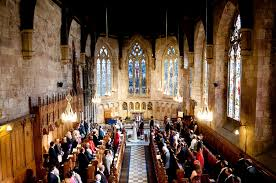
St Salvator’s is one of two University Chapels in St Andrews.  It’s a magnificent building – dating back to 15th Century.  Now and again I get the opportunity of preaching there – which I did last Sunday

And this is what I said


Candlemas

We were in All Saints, St Andrews, last night for Candlemas.  Those who know All Saints will understand that we were immersed in – or illuminated by – the riches of liturgy.  If you haven’t explored this distinctive strand of the life of the Scottish Episcopal Church, All Saints is one of the places to find it.

My primary reason for going there last night was to mark the completion of the renovation and restoration of the Rectory.  It is an astonishing building – spread over three floors, it is dauntingly large.  But the attention of most clergy is drawn to the magnificent book-lined study just inside the front door.  Here at Blogstead, my facilities in that department are slightly less grand – indeed rather more cell-like.

Restoring the house has of course been a real challenge for the Vestry – but a challenge to which they and their Rector, Rev Alasdair Coles, have risen admirably.  The group of buildings at All Saints arise through the generosity and benefaction of Mrs Younger.  They express a holistic vision – church, Rectory, hall, library, gymnasium.  So to lose any part of that would diminish the whole.

And of course this is St Andrews ….    In St Andrews, St Andrews, our other congregation in the town, we came to a similar conclusion.  In a compact university town, the Rector and his family should be living at the ‘heart of things’   That means visible and accessible to a student population whose life is concentrated within a relatively small area.   In each case, a large Rectory is to be used not just for family – but as a focus for the building of wider community.

Like many churches, the Scottish Episcopal Church went through a difficult period in the last century – a sort of loss of confidence.  One of the signs of that was the failure or inability of Trustees to protect and safeguard buildings – assets and infrastructure which are now needed to resource mission in more confident times.   That of course has affected me personally as one of the losses was the Bishop’s House in Perth.

So it was good to see the real pleasure and pride of the people of All Saints in what has been achieved – good to know that since Christmas several hundred people have already passed through the Rectory.  A job well done.