
Great Easter celebration in St Ninian’s Cathedral today
I hope to get it right one day
Great Easter celebration in St Ninian’s Cathedral today
I hope to get it right one day
Maundy Thursday today. So we gathered clergy and Lay Readers in the Cathedral for our annual Chrism Mass. It’s an important – and a moving – moment. And this is what I said
I decided not to trouble myself with the recent reports that Clergy are at the top of the job satisfaction statistics – and publicans are at the bottom. For a start, I don’t quite understand the dichotomy. I thought that clergy and publicans were related occupation – both spending a lot of time listening to unhappy people. But then what clergy do seems to have connections to many other professions – actors, barristers, politicians, counsellors ….
But more important is whether or not clergy are happy in their work. To which the answer is a guarded ‘yes’. Clergy have a reasonable degree of autonomy in their work – they have a reasonable level of job security – they often feel that what they are doing is worthwhile and makes a difference. But I am cautious about it because I think that the task of clergy is much more challenging than it was when I was ordained 38 years ago. The march of the secular society and the decline of institutional churches have proceeded inexorably. There has been a decline in respect. I’m not nostalgic about the days of deference. But clergy life – well certainly my life – is full of difficult correspondence and robust exchanges. At the extreme end is abuse and bullying – as described by Revd Malcolm Round, Rector of Balerno in his blog at http://www.stmungos.org/?p=15907
Idle reading suggested that I should try the BT Broadband Accelerator in the hope that it might speed up our snail-like broadband. An investment of £5.99 seemed worth a try. The result has been a welcome and significant increase in speed from 0.5 to 0.7. Perhaps it’s the moment to mention that the corresponding speed in rural Crete was 5.
This is a really serious issue for all of us who live in rural Scotland. It matters to anybody who wants to develop business and create employment. It matters to us as a church – if we want to meet on line rather than spending time and money travelling – and if we want to develop on line delivery of training programmes.
Anyway, the first benefit of even this meagre increase in broadband speed was that we were able to watch this delightful take on the State Visit of Irish President Michael D Higgins … without it stopping in the middle
Ireland has now produced three outstanding Presidents in a row. Michael D – as he is universally known in Ireland – gave a display of raw political courage in his pre-visit interviews. Deputy First Minister Martin Maguinness was congratulating himself on his decision to accept the invitation to lunch with the Queen at Windsor Castle – not as bad as it sounds because he was performing the vital political task of explaining to his constituency why he was making this significant move at this time. But Michael D weighed in with a bit of reality-speak:
Asked if he believed the victims of violence deserved an apology, he replied: “Oh yes, of course I do, on all sides.”
The president said that many involved in violence had sought to establish a distance between “versions of themselves and actions they deemed necessary at the time,” but they could show a “great deal more” humility.
He was asked if it was possible to have a lasting and meaningful peace without addressing the past.
He said: “No, I think you have to address the past… You can’t allow yourself to be crippled by the past. You have to be able to address the past in a way that doesn’t cripple you, in the present, or damage you into the future.”
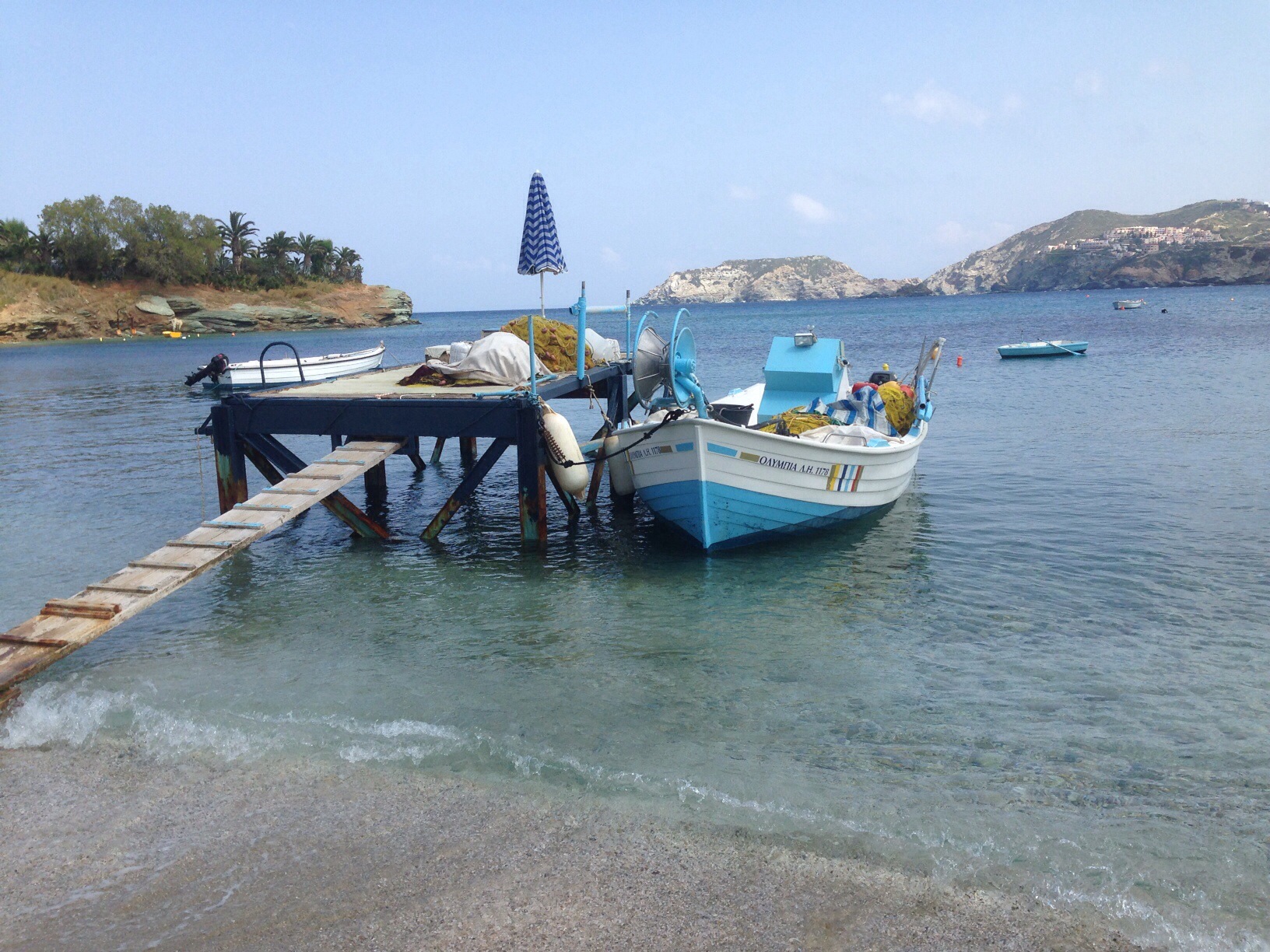
A week in Crete slips by very easily. And of course it’s easy to get there now that there is a direct flight from Edinburgh to Heraklion – just four and a half hours on Easyjet.
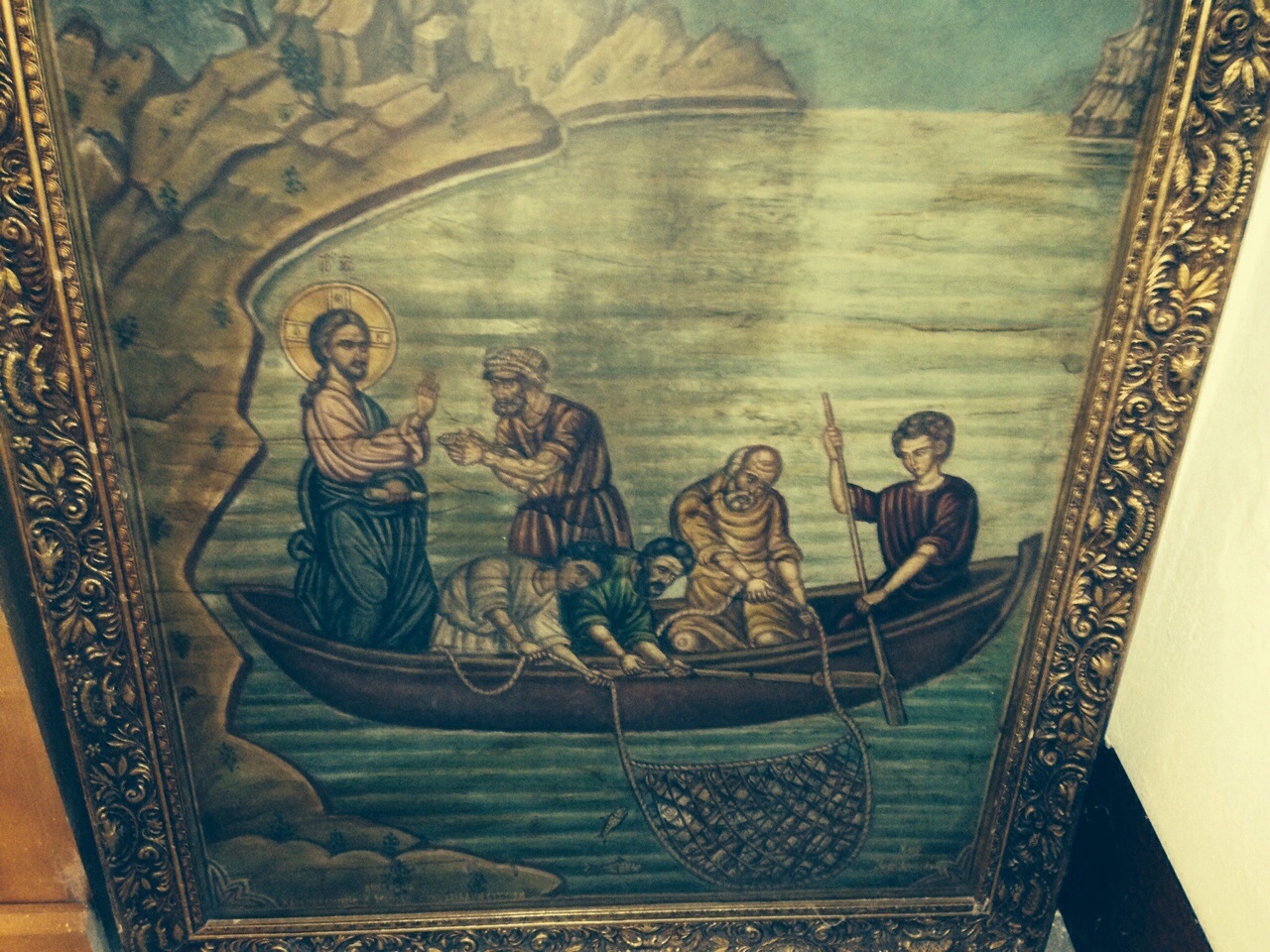
We drifted around doing nothing in particular but doing it very well. As you can see, we found a Casting the Net picture – this one in a deserted church on top of the hill above a little village called Pyrrhenia.
My last visit to Crete was in 1970. The Colonels were in power. Most of the roads were unmetalled. I lived on £80 for four weeks.
Today … the people are astonishingly friendly and ready to talk. Some of the remote rural areas are very depressed – the only people left are the elderly who can’t work the land and are desperately poor. But there is hope as well. It was the start of the season. So we met – across several glasses of raki – people who are building businesses and creating employment.